Masonic rings are the most widely worn piece of Masonic jewelry. A Brother may wear his apron only in lodge, but a Masonic ring goes with him everywhere: to work, to family dinners and to lodge. For many men, choosing a first Masonic ring is a milestone that follows soon after being raised a Master Mason.
This guide explains the main styles of Masonic ring, what the common symbols mean, the long-running debate about which way the compasses should point, and how to choose metal, stone and size so the ring lasts a lifetime.
The main styles of Masonic ring
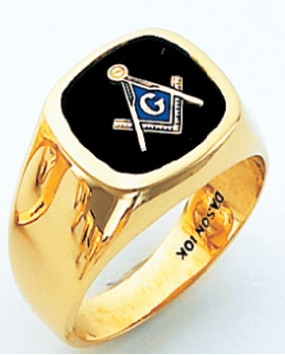
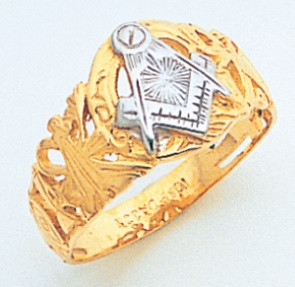
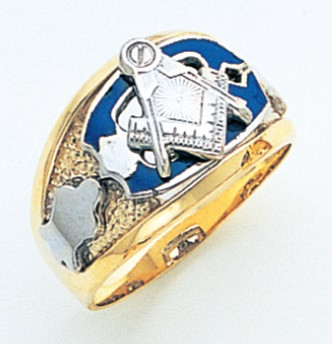
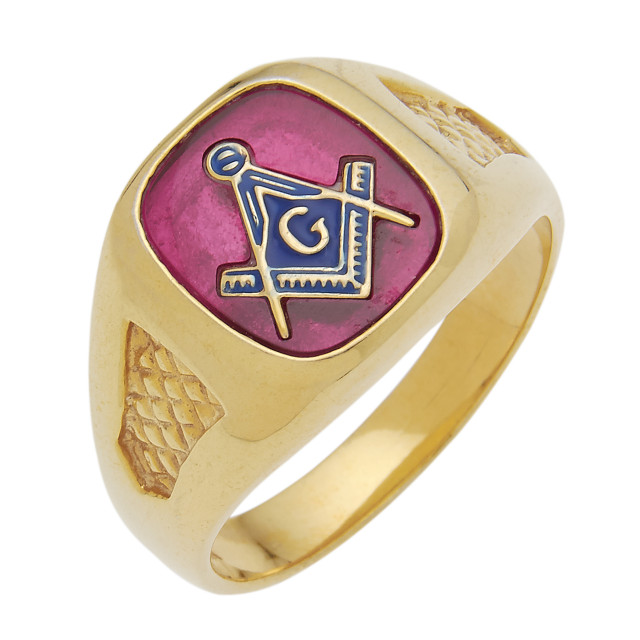
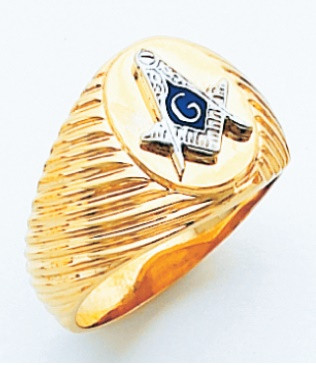
Blue Lodge rings. The classic Masonic ring carries the Square and Compasses, usually with the letter G at the center. It is the ring most Master Masons buy first. Blue stones are traditional, echoing the blue of Craft Masonry.
Past Master rings. These mark a Brother who has served as Worshipful Master. The usual emblem is the compasses opened on a quarter circle (a quadrant), often with a sun at the center.
Scottish Rite rings. These usually show the double-headed eagle, often with the number 32 for a 32nd-degree Mason. Some Scottish Rite Masons also wear a plain band given in the 14th degree.
York Rite rings. Royal Arch rings carry the keystone or triple tau. Knight Templar rings carry the cross and crown.
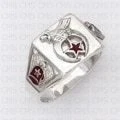
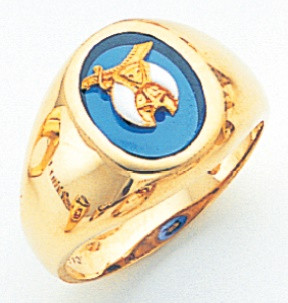
Shrine rings. Nobles wear the scimitar, crescent and star. See our dedicated guide to Shriner rings.
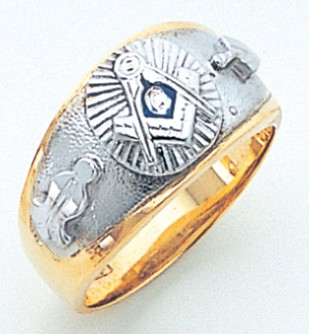
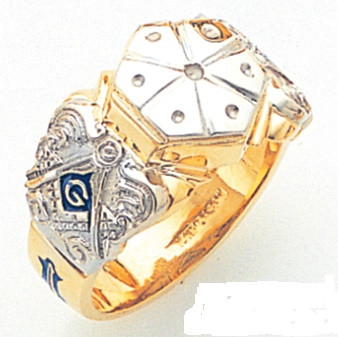
Combination rings. Many Masons belong to several bodies and choose a ring that shows each of them, with one emblem on top and others on the shoulders.
Which way should the compasses point?
This is the question Masons argue about most. One view says the points should face the wearer, as a personal reminder; the other says outward, so the world can read the emblem. Most Grand Lodges have no rule either way. Our guide to which way to wear a Masonic ring explains both traditions, plus which hand and finger to choose.
Choosing metal and stone
- Gold and gold-tone rings look traditional and formal.
- Silver, steel and tungsten rings are durable and understated, which suits a ring worn at work every day.
- Two-tone rings combine both for contrast.
- Stones: blue is classic for Blue Lodge rings; red suits Knight Templar and Shrine rings; black onyx is a popular neutral.
If the ring will be worn daily, choose a recessed emblem that won't wear smooth, and check how securely any stone is set.
Getting the size right
Masonic rings are usually wider and heavier than wedding bands, so they fit more snugly. Many Masonic rings, especially those with emblems on the shoulders, can't easily be resized. Read our ring sizing guide before you order.
Who may wear a Masonic ring?
Traditionally a Masonic ring is worn by a Master Mason. Rings for appendant bodies, such as the Scottish Rite, York Rite or Shrine, are worn by members of those bodies. Wearing an emblem you haven't earned is considered poor form.
Buying a Masonic ring as a gift
Families often give a Masonic ring when a man is raised, installed as Master or celebrates a long-service milestone. Check which bodies he belongs to before choosing, and borrow a ring he already wears to confirm the size.
Where to buy Masonic rings
Masonic Supply Shop is owned and operated by Freemasons. Browse its current selection of Masonic and Shriner rings, or ask the team about a particular style.
FAQ
What finger is a Masonic ring worn on?
There is no fixed rule. Many Masons wear it on the ring finger of the right hand, keeping the left for a wedding ring.
Can a woman wear a Masonic ring?
Rings of regular Craft Masonry are worn by Masons. Women's and co-Masonic orders have their own emblems and rings, and family organizations have theirs.
Are Masonic rings expensive?
Prices range widely, from durable steel rings to solid gold. Choose the metal that suits how often you'll wear it.